
Learning how to germinate cannabis seeds doesn’t have to be complicated. The paper towel method is popular because it lets you watch the seed crack open and see the taproot before you plant it.
The basic idea is simple: give the seed consistent moisture, warmth, and oxygen while protecting it from drying out. Light isn’t necessary during germination, so keeping the setup dark is an easy way to maintain stable conditions.
With healthy, properly stored seeds, you may see a taproot within a few days. Some seeds are faster, while others can take a week or longer.
Using ILGM seeds? Follow the germination instructions ILGM provides with your order if you want to preserve eligibility for its germination guarantee. Read ILGM’s germination guide.
What Do You Need to Germinate Cannabis Seeds?
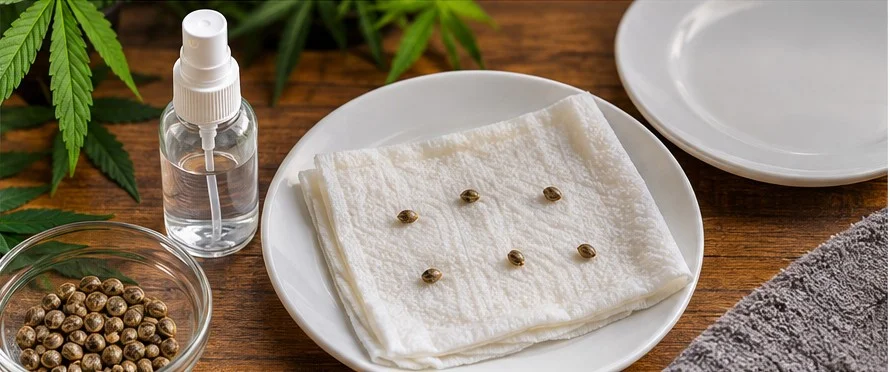
- Cannabis seeds
- Two clean, plain, unscented paper towels
- Two clean plates, or a plate and suitable cover
- Clean, room-temperature water
- A warm, stable location
- Clean tweezers
- Prepared growing medium and container
- Labels or a marker
- Optional: small spray bottle
A temperature around 70–80°F (21–27°C) is a practical target. Avoid excessive heat. A clean plate, damp paper towel, and consistently warm location are enough.
How Do You Germinate Cannabis Seeds With the Paper Towel Method?
Step 1: Wash Your Hands and Clean Your Workspace
Start with clean hands and clean equipment. A warm, damp paper towel can also encourage mold, so use clean plates and handle seeds carefully.
Step 2: Dampen the Paper Towels
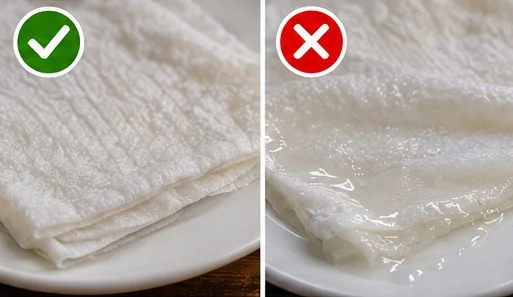
Wet two paper towels with clean, room-temperature water, then squeeze out excess. They should be damp, not dripping wet. Water pooling around the seeds means the towel is too wet.
Step 3: Place the Seeds on the First Towel
Place one damp paper towel on a clean plate. Put the seeds on top, leaving approximately one inch between them so they are easy to inspect.
Step 4: Cover the Seeds With the Second Towel
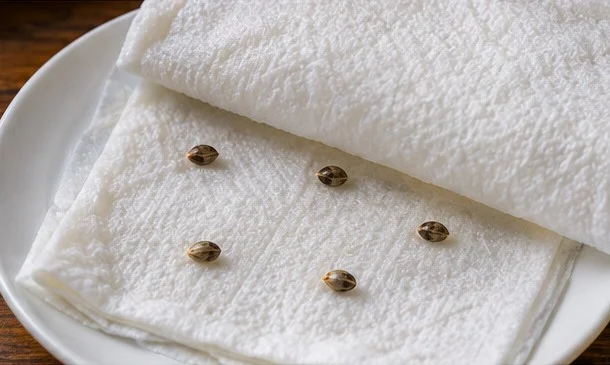
Place the second damp towel over the seeds. They should be surrounded by moisture without sitting in standing water.
Step 5: Cover the Plate
Place a second plate upside down over the first. This helps limit drying, retain humidity, maintain darkness, and prevent accidental disturbance.
Step 6: Put the Seeds Somewhere Warm and Dark
Keep the covered setup in a stable location around 70–80°F (21–27°C). Avoid direct contact with heaters or uncontrolled heating devices.
Step 7: Check the Seeds Once a Day
Check that the towel remains damp and look for a white taproot. Add a little water if drying occurs; avoid repeatedly handling the seeds.
When Should You Plant a Germinated Cannabis Seed?
Once the seed has cracked and produced a visible white taproot, it is ready for growing medium. A root approximately ¼–½ inch long is a practical point to plant. Leaving a long root on paper towel increases the risk of tangling or damage.
What Should the Taproot Look Like?
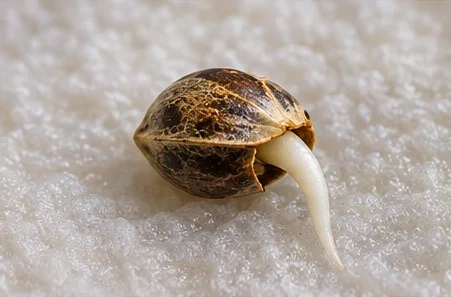
A healthy emerging taproot generally appears white or cream-colored and extends from the cracked brown seed shell. The shell may remain mostly intact.
How to Plant a Germinated Cannabis Seed
Prepare the growing medium
Moisten it evenly without saturating it.
Make a small planting hole
Aim for approximately ¼–½ inch deep.
Handle the seed carefully
Use clean tweezers if necessary. Hold the shell, not the taproot.
Place the seed root-down
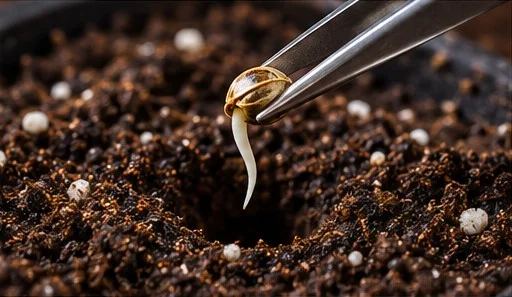
Point the taproot downward without forcing it into an unnatural shape.
Cover the seed lightly
Use loose medium and avoid compaction.
Moisten the surface
Water or mist lightly without flooding.
Wait for the seedling
Keep conditions stable and provide gentle light after emergence.
Next: Seedling care guide
Hollywood’s tip: Label every seed’s spot on the plate with tape and a marker before you start (“NL Auto 1, NL Auto 2…”). After two days of lifting towels, every seed looks the same, and you’ll want to know which plant is which come harvest time.
Autoflowers: Should You Germinate Them Directly in the Final Pot?
For autoflowers, planting directly into the final container can avoid unnecessary transplant stress. Seeds can still be germinated using the paper towel method; prepare the final container before the taproot appears.
Not sure which medium? See Soil vs Coco vs Hydro.
What Are Other Ways to Germinate Cannabis Seeds?
Directly in soil or growing medium
Less handling and no exposed taproot, but germination cannot be observed below the surface.
Water soaking
Some growers briefly soak seeds in room-temperature water before moving them to a towel or growing medium. Avoid prolonged submersion.
Starter plugs or rockwool
These can support germination directly in a material used in hydroponic or controlled systems.
For beginners who want to see the taproot before planting, the paper towel method makes germination easy to observe.
Cannabis Seed Germination Troubleshooting
| Problem | Possible cause | What to do |
|---|---|---|
| Seed hasn’t cracked after 1–2 days | May simply be slow | Maintain conditions and check daily |
| No taproot after several days | Temperature, moisture, or viability | Check warmth and dampness; avoid saturation |
| Towel is dripping wet | Excess water | Remove excess water |
| Towel dried out | Insufficient moisture | Re-dampen and monitor |
| Root appeared but stopped | Drying or unstable conditions | Stabilize moisture and temperature |
| Root tangled in towel | Seed left too long | Avoid pulling or tearing the root |
| Mold appears | Excess moisture or contamination | Remove affected material and use clean equipment |
| Seed cracked but no root | Germination may have stalled | Maintain stable conditions and allow time |
| Seedling has shell attached | Shell has not released | Keep appropriately moist and allow time |
| Several seeds fail | Environmental or storage issue | Check temperature, storage, and seed age |
Don’t Give Up Too Quickly
A seed that has not germinated after 24–48 hours is not necessarily bad. Some seeds take several days. Maintain stable conditions before deciding germination has failed.
What If the Taproot Gets Stuck in the Paper Towel?
Avoid pulling on the fragile root. If needed, plant with a small piece of damp towel attached rather than damaging the root.
What If the Seedling Comes Up With the Shell Stuck On?
A stuck seed shell sometimes releases naturally. Maintain appropriate moisture and avoid immediately pulling the shell off.
What If an ILGM Seed Fails to Germinate?
Keep order details, packaging, and photographs of the germination setup. Check the current ILGM guarantee requirements, including any documentation or claim limits, before making a claim.
ILGM’s germination guarantee only covers seeds germinated with its paper towel method, so follow ILGM’s germination guide exactly and keep your order number. Details: our plain-English germination guarantee guide.
- ILGM germination guarantee
- Our plain-English ILGM germination guarantee guide
- Our ILGM review
A Smart Habit Before Germination
Photograph the seed package, order information, seeds, and setup. Documentation may help with a replacement request.
Seedling Is Up: What’s Next?
Once a seedling emerges, germination is complete. Young seedlings need appropriate light, stable temperatures, adequate humidity, careful watering, gentle airflow, and a suitable growing medium.
- Gentle light, not full blast. Keep a light at the higher end of the maker’s range for seedlings.
- High humidity, roughly 60–70%, helps baby plants.
- Water lightly in a small circle around the stem. See How to Water Cannabis Plants.
- No nutrients yet in most potting mixes.
Frequently Asked Questions
How long does it take to germinate cannabis seeds?
Many seeds show a taproot in about 1–4 days, although some take a week or longer.
What temperature is best?
Around 70–80°F (21–27°C) is a practical target.
Do cannabis seeds need light to germinate?
No. Provide gentle light once the seedling emerges.
Should I soak seeds first?
It is optional. Some growers soak first; others use damp towels directly.
How wet should the paper towel be?
Damp but not dripping, with no standing water.
When should I plant a germinated seed?
When a visible taproot emerges; around ¼–½ inch is a practical length.
How deep should I plant it?
Approximately ¼–½ inch deep, root-down.
Can I use this method for autoflowers?
Yes. Plant directly into the final container to minimize transplanting.
Why is the shell still attached?
It can take time to release naturally; avoid immediately forcing it off.
What if nothing happens after a week?
Check temperature, moisture, seed age, and storage conditions.
How often should I check?
Approximately once a day is usually enough.
Ready for the Next Step?
Once your seedling is above the surface, continue with the relevant beginner guides and product resources.
- Cannabis Seedling Care
- Complete Cannabis Grow Guide
- How to Grow Cannabis at Home
- ILGM beginner collection
- Best autoflower seeds for beginners
Disclaimer: For adults 21+ and educational purposes only. Grow only where home cultivation is legal, and follow your state and local rules. We make no medical claims. Product details, prices and policies are set by the seller and can change, so check the seller’s page before you buy.